A quick message from us at 1752vc (Formerly Pegasus): |
Accelerate: Where Traction Meets Velocity
Our highly personalized three-month program offers $100K in funding, expert mentorship, and a powerful network to help you achieve your business goals. |
Apply Here |
|
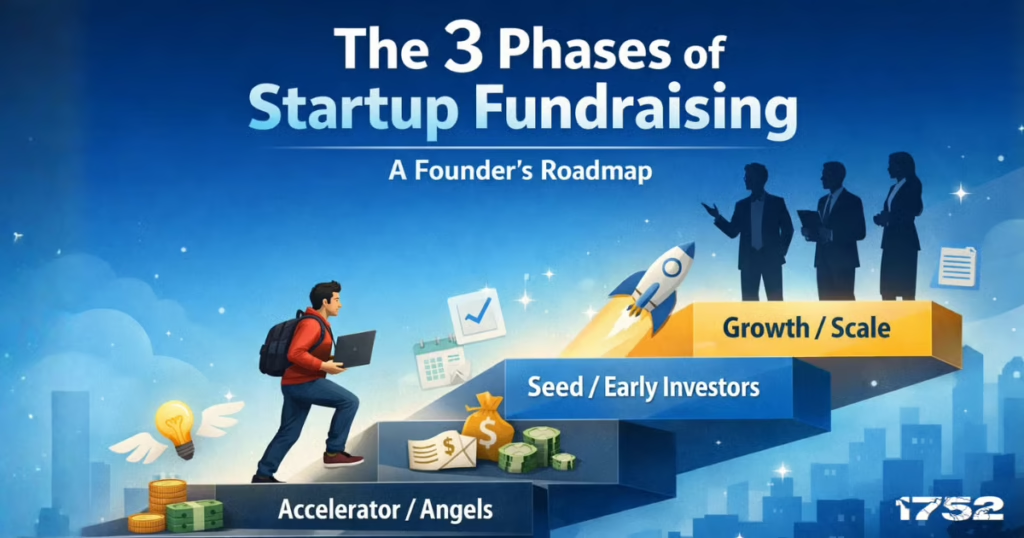
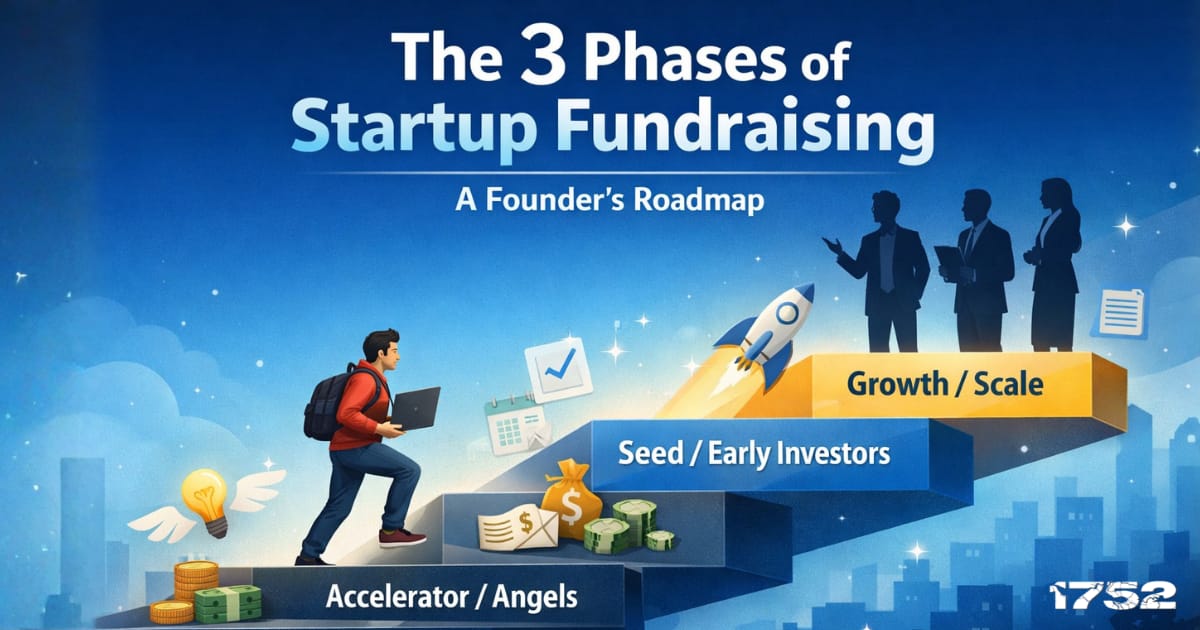
Most startups raise money more than once, following a familiar trajectory: |
1. Phase 1: Securing a small amount of initial funding—often from accelerators like 1752vc, Techstars, Y Combinator or angel investors. 2. Phase 2: Raising a few hundred thousand to a few million dollars to build the company and prove the business model. 3. Phase 3: Scaling up through later rounds as the company demonstrates clear success and growth potential. |
|
|
Reality is rarely this tidy. Some startups raise multiple rounds during Phase 2, while others skip Phase 1 entirely. Increasingly, startups are entering Phase 2 with funding already in hand. Despite these variations, the three-phase framework offers a useful lens through which to understand fundraising. |
This guide focuses on Phase 2 fundraising, providing the strategies and insights startups need to navigate this critical stage effectively. |
The Dual Challenge of Fundraising |
Fundraising is challenging in two distinct ways: |
1. Hard like lifting a heavy weight: Convincing people to part with large sums of money is inherently difficult. 2. Hard like solving a puzzle: The process is complex, opaque, and often counterintuitive. |
|
|
Investors’ motivations can be unclear, and many deliberately mislead founders. Combine this with founders’ natural optimism, and the result is often frustration and inefficiency. To survive, founders must adopt a structured approach, relying on rules and external constraints to guide their actions. |
Key Forces Shaping Phase 2 Fundraising |
Investors Are Fear-Driven |
Investors are caught between two fears: |
• The fear of investing in a failure. • The fear of missing out (FOMO) on a breakout success. |
|
|
These conflicting forces create indecision, leading to delays and mixed signals. |
The Need for Speed |
• Startups grow rapidly, and investors feel pressure to act before it’s too late. • However, many still try to wait as long as possible, creating a game of chicken where one investor’s decision can trigger a cascade of actions from others. |
|
|
Misalignment of Goals |
• While founders prioritize securing funding quickly to focus on building their startups, investors often want to gather as much information as possible before committing. • This dynamic can lead to friction and prolonged fundraising timelines. |
|
|
Don’t Raise Money Unless You Need It |
Not every startup needs to raise money. Consider skipping fundraising if: |
• You can grow without it: Bootstrapping or organic growth may be sufficient for certain business models. • It doesn’t align with your goals: If outside funding won’t accelerate your growth, it may not be worth the effort. • You’re not ready: Attempting to fundraise before you can convincingly demonstrate your potential will waste time and harm your reputation with investors. |
|
|
Be in Fundraising Mode or Not |
Fundraising is highly distracting, and startups can’t afford to divide their attention for long. The solution: |
• Focus completely when fundraising: Treat it as an all-consuming project that needs to be completed quickly. • Avoid partial efforts: Don’t meet with investors unless you’re fully in fundraising mode. This avoids wasting time and ensures you maintain momentum. |
|
|
Secure Strong Introductions |
Introductions remain critical: |
• Leverage your network: Ask existing investors, founders, or startup community members to introduce you to potential backers. • Supplement with platforms: Use tools like AngelList, Sparkxyz, or Wefunder, to reach additional investors after exhausting personal connections. |
|
|
Hear “No” Until You Hear “Yes” |
Investors often lead founders on, either deliberately or unintentionally. To protect yourself: |
• Assume no commitment until it’s explicit: Only a formal offer with no contingencies counts as a “yes.” • Get written confirmation: If you believe an investor has committed, ask for written confirmation to avoid misunderstandings. |
|
|
Use a Weighted Approach |
Fundraising requires prioritizing your efforts: |
• Breadth-first search: Talk to all potential investors in parallel to create momentum. • Weight by expected value: Focus more attention on investors who are likeliest to commit and add the most value. |
|
|
Know Where You Stand |
After every meeting, ask: |
• What are the next steps? • What additional information does the investor need to make a decision? • What is the timeline for their process? |
|
|
By tracking progress with each investor, you can allocate your time effectively and avoid wasting energy on dead ends. |
Get the First Commitment |
The first “yes” is the hardest and most critical. Once you secure an initial investor: |
• Leverage their network: Ask them to introduce you to others. • Build momentum: Use their commitment to attract additional interest. |
|
|
Close Deals Quickly |
Once an investor commits: |
• Move fast: Aim to get the money in the bank as soon as possible to minimize the risk of them changing their mind. • Stay proactive: Follow up on every step of the closing process. |
|
|
Don’t Overcomplicate Valuations |
Valuation is often overemphasized: |
• Focus on securing the right investors: The long-term value they bring often outweighs short-term valuation gains. • Avoid premature optimization: Start with a reasonable valuation and adjust based on investor interest. |
|
|
Avoid Over-Raising |
While raising large sums can be tempting, it carries risks: |
• Higher expectations: A high valuation sets a steep benchmark for future rounds. • Increased rigidity: More money often leads to faster spending and bloated teams, which can hinder adaptability. |
|
|
Be Nice |
Fundraising can strain relationships, but maintaining professionalism is critical: |
• Treat investors respectfully, even if they reject you: They may invest in a later round or refer you to others. • Stay humble: Overconfidence can alienate potential backers and harm your reputation. |
|
|
Conclusion: Focus on What Matters |
Fundraising is a necessary step for many startups, but it’s not the goal. The ultimate test of your startup’s success lies in building a product people love and growing a sustainable business. Use fundraising as a tool to enable that mission, and approach it with focus, discipline, and resilience. |