

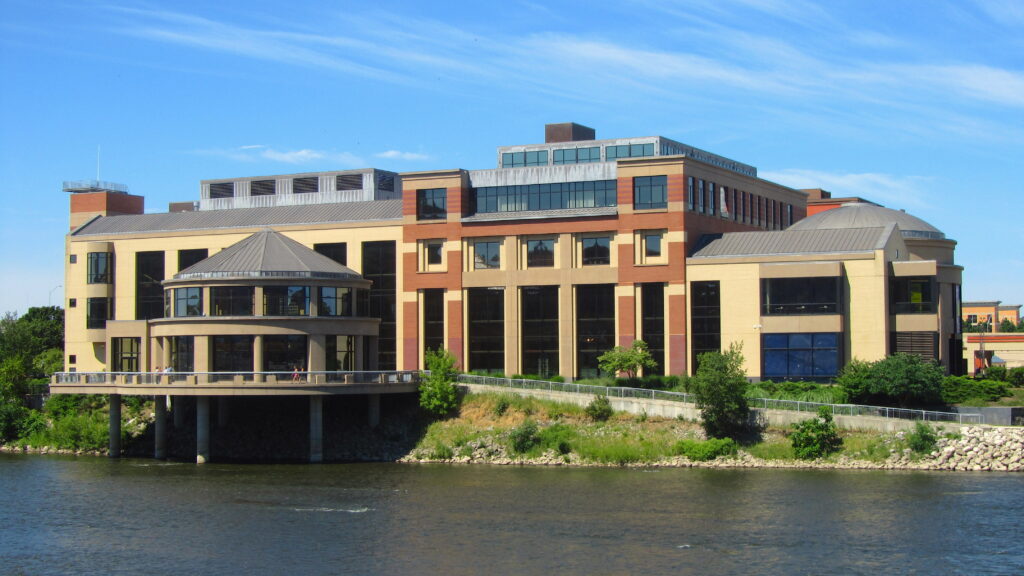
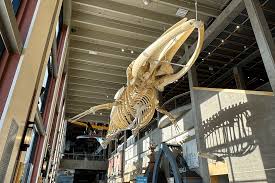
GRAND RAPIDS, MI – Our world is truly an ocean planet. More than 70 percent of the Earth’s surface is covered by oceans, yet surprisingly little of these vast realms has been explored. Now, with the use of 21st-century technologies like robotics, ROVs and AUVs, satellite monitoring, miniaturization, and high-definition imaging, that is beginning to change. In Unseen Oceans, an exhibition produced by the American Museum of Natural History, visitors will embark on a journey that takes them from the oceans’ sunlit surfaces to their inky depths as they discover the latest ocean science and encounter the researchers and technologies that are revealing our blue planet as never before. This special exhibition opens at the GRPM on June 20 and will be on display until January 2, 2027.
“The Earth’s oceans have profound impacts on all of us, even here in Grand Rapids, where the nearest ocean is hundreds of miles away,” said Kellie Rosekrans, Director of Marketing. “This immersive exhibit allows you to feel the scale of its inhabitants, put yourself in the position of a researcher, and follow your curiosity. We can all learn something new from the mysteries and discoveries revealed in Unseen Oceans.”
In Unseen Oceans, visitors will explore a series of media-rich galleries showcasing a range of marine environments and introducing the scientists who are using cutting-edge research tools and developing new methods to explore the oceans. How do blue whales spend their day? (High-tech, removable tags on their backs provide the answer.) What’s going on in the deep waters surrounding Hawai`i? (Hint: Advanced sonar reveals a new island is set to emerge in more than 100,000 years.) How can we identify the best locations for marine protected areas? (Fleets of small autonomous robots may offer important clues.) Visitors to Unseen Oceans will learn the answers to these exciting questions and explore other novel lines of inquiry that ocean researchers have only recently uncovered.
“Throughout the nearly three decades that I’ve spent studying the world’s oceans, I’ve been continually astonished at the ingenuity of my fellow marine scientists as they’ve utilized and adapted the latest technologies to make discoveries that we could previously only dream of,” said John Sparks, curator in the Department of Ichthyology at the American Museum of Natural History and curator of Unseen Oceans. “For example, it was only in the last 15 years that my colleagues and I revealed the widespread incidence of biofluorescence—the phenomenon by which organisms absorb light, transform it, and emit it as a different color—among marine fishes. Visitors to this exhibition will learn about that research and more as they meet the scientists who are quite literally illuminating the unseen frontiers of our ocean world.”
In the exhibit, visitors will encounter larger-than-life models of unusual and beautiful planktonic species, fascinating fossils from Earth’s past—from ammonites to megalodon teeth, and a 180-degree, high-resolution screen where animations of blue whales, giant squid, and manta rays swim by visitors at true-to-life scales. They will learn about underwater cameras, enjoy a virtual ride in an immersive submersible theatre, and engage with interactive stations that allow them to lead exploration in a virtual submersible.
Visitors and community members should plan their summer visit now to explore Unseen Oceans, opening June 20. This exhibit is included with general admission to the Museum. The GRPM offers discounts for Kent County Residents, and Kent County children ages 17 and under can visit for FREE every day. Guests can also add on a ride on the 1928 Spillman Carousel and a show in the Roger B. Chaffee Planetarium to experience all the GRPM has to offer.
Unseen Oceans is organized by the American Museum of Natural History, New York (amnh.org). Unseen Oceans is curated by John Sparks, curator in the American Museum of Natural History’s Department of Ichthyology in the Division of Vertebrate Zoology.