Knowledge • News • Insights

In Partnership With

PlanetM Mobility Report Early October 2020

MEDC_PlanetMPlanetM Mobility Report

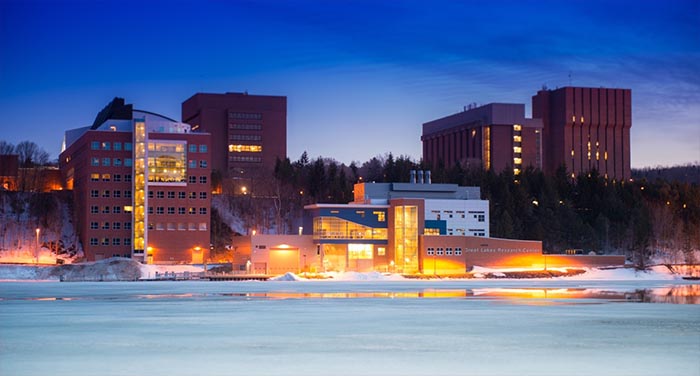
Great Lakes Research Center Establishes World’s First Maritime Test Site for Autonomous Technologies

 
Michigan-Tech-Great-Lakes-Research-Center-700.jpg


The Great Lakes Research Center (GLRC) at Michigan Technological University (MTU) is the newest PlanetM Testing Facility partner as part of the latest round of PlanetM Testing Grants. Two startups, Shift Environmental Technologies and Strange Development are also included in the partnership.

The GLRC has been a leader in marine-based autonomy for more than a decade and is home to the Martine Autonomy Research Site (MARS) – the world’s first designated freshwater environment for testing autonomous surface and subsurface vehicles and vessels. The autonomous testing site stretches in a 30-mile radius, encompassing Lake Superior coastline and inland waterways. A unique asset in Michigan’s Upper Peninsula, the site is open to companies, government agencies, researchers, universities and other organizations.

Michigan-based startup Strange Development has received a PlanetM testing grant to test its REVolution® technology at KRC’s Advanced Power Systems Research Center at MTU. The technology aims to deliver highly efficient, emissions-compliant, durable engine systems with high power to weight ratios at a lower manufacturing cost.


Department of Energy Funds $7M Cybersecurity Infrastructure Testing at American Center for Mobility


The U.S. Department of Energy announced more than $7 million in funding to Michigan-based cybersecurity company The Dream Team LLC to develop an original infrastructure to protect the electric grid from cybersecurity attacks. Once developed, the testing of vehicle-to-grid (V2G) technology and electric roadways will be held at the American Center for Mobility in Ypsilanti.

The technology will be applicable to both existing EV charging systems and new technologies, and by developing protocols to protect EV technology in its infancy, the testing will demonstrate how cyber-technologies can be integrated with charging systems to protect the grid from sophisticated attacks.

The Department of Energy’s Office of Energy Efficiency & Renewable Energy contribution of $4,712,949 strengthened by an industry match contribution of $2,349,135 from partners including DTE Energy, NextEnergy, University of Michigan Dearborn and Wayne State University.

Utilizing innovative public/private partnerships like these is a key component of Michigan’s competitive advantage in developing, testing and deploying mobility and electrification solutions driving the future of transportation.


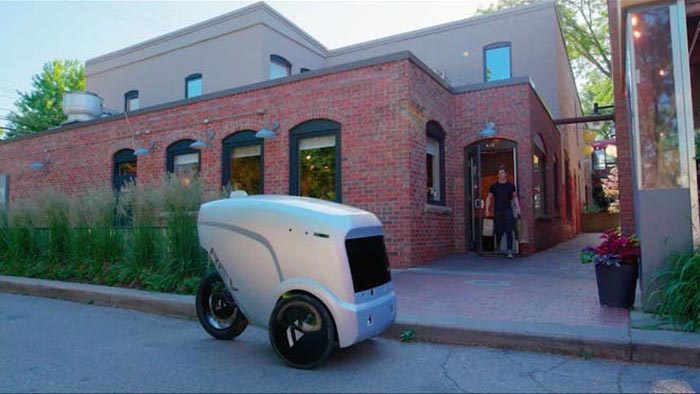
Refraction AI’s REV-1 Safely Delivers Meals and Groceries Autonomously During Pandemic
 
 
Reaction-AI-REV-1-c.jpg


Ann Arbor-based Refraction AI is aiming to diminish the effects of the pandemic with REV-1, a three-wheeled autonomous robot that has been testing over the last year to safely deliver meals and groceries in all environments.

The REV-1 does not involve any human interaction other than taking food or groceries out of the robots which is roughly four-feet tall and 100 pounds in weight. Considered an e-bike, the REV-1 can travel in bike and car lanes at speeds up to 15 mph and can travel roughly 3.5 miles from restaurant to customer.

The company is scaling up quickly as a result of the demands created by the current pandemic, hiring a new CEO and adding 17 more REV-1 delivery robots to its existing fleet of eight within the month of October.


Tyler Duvall Takes Over as Chief Executive Officer of Cavnue


Cavnue, the company building the roads of the future, announced the appointment of co-founder Tyler Duvall as chief executive officer. Duvall is a nationally recognized leader in transportation infrastructure and brings a breadth of private and public sector experience. He will lead Cavnue as it designs the physical, digital, coordination and operational infrastructure to accelerate and realize the full potential of connected and autonomous vehicles.

Additionally, Cavnue announced the hiring of Mark de la Vergne as Director of the company’s Michigan office focused on designing the first fully dedicated connected and autonomous laneway in the United States. De la Vergne previously served as Chief of Mobility Innovation for Detroit Mayor Mike Duggan.


The Michigan Mobility Institute is Hiring a Program Coordinator


The Michigan Mobility Institute accelerates mobility workforce development, upskilling programs and post-secondary degrees by bringing industry and education partners together.

The program coordinator will support the Michigan Mobility Institute in coordinating the day-to-day functions of the Mobility On-Ramp Collaborative and administrating strategic needs of the organization.

Interested in applying or know someone who is? Click below to find the full job description and application.


Reminder: Accepting Applications for PlanetM Testing Grant


Accelerate your company’s mobility innovation by accessing Michigan advanced testing facilities including:

 Mcity at the University of Michigan
 ACM
 GM Mobility Research Center at Kettering University
 Michigan Unmanned Aerial Systems Consortium
 Keweenaw Research Center at Michigan Technological University

Testing grant applications are evaluated on a rolling basis. To learn more or to apply, visit https://www.planetm.com/test-and-pilot/.


Upcoming Virtual Events


In The News


California moves to ban gasoline cars. Will Michigan follow suit?
It was just a few weeks ago that California’s governor signed an executive order requiring that all new passenger cars and trucks sold in the state be zero-emission vehicles by 2035.

7 Action News reporter Ali Hoxie went digging to find out if Michigan could see the same type of legislation here.

“The California executive order wasn’t 100 percent out of left field,” said Chief Mobility Officer for Michigan Trevor Pawl.

Pawl was appointed by Governor Gretchen Whitmer to the newly developed department, the Office of Future Mobility and Electrification, back in July. The goal is to explore the future of transportation using electrification.

Grand Rapids, Spin launch e-scooter pilot program in downtown business, residential areas
They’re electric. They’re for rent, at $1 plus 15 cents a mile. And they are available now in downtown Grand Rapids.

About 300 electric scooters are parked around downtown Grand Rapids as part of a pilot project designed to improve transportation using environmentally friendly options.

“As a solo, open-air form of transportation, scooters can offer residents a lower-risk mobility option for short distance travel,” said Justin Kimura, assistant director of Mobile GR, the city’s transportation and parking department. “We are proud to partner with Spin on this new and eco-friendly transportation option for our residents, commuters and visitors.”

Where Digital Meets Physical
Pratt Miller’s legacy is innovation: As autonomy and

What's Hot

Get the latest news from MBN right in your inbox

Sign up for our newsletter and never miss a beat.