
 Chris Holman welcomes Dr. Scott Grasman – Dean, College of Engineering & Computer Science, Kettering University, Flint, MI.
Watch Dr. Grasman and Chris discuss the GM Mobility Research Center and how it advances mobility research and talent, in the YouTube video shared below:
Chris had several questions he wanted to cover with Dr. Grasman in this conversation:
Dr. Scott Grasman – Dean, College of Engineering & Computer Science
GM Mobility Research Center (MRC) & applied mobility research
NSF recognition, experiential learning, and faculty–industry structures
- What the MRC is
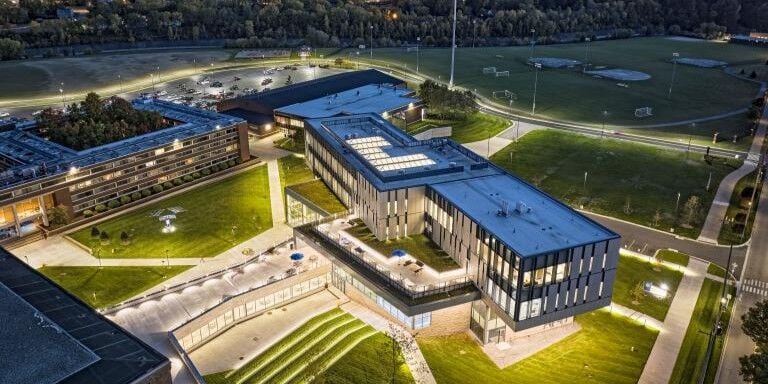
- The GM Mobility Research Center is a 21-acre outdoor laboratory and proving ground located on Kettering’s campus, featuring a 3.25-acre dynamic pad, a half-mile test track, a garage, and a conference facility.
- Kettering describes it as “the only autonomous vehicle testing track of its kind on a college campus in the United States.”
- Capabilities and use cases
- The track incorporates S-curves, elevation changes, multiple surfaces, and straightaways, supporting testing of autonomous vehicles, vehicle safety systems, hybrid and electric vehicle technologies, and ADAS.
- The Autonomous Driving & Artificial Intelligence Lab uses the MRC as its primary outdoor testbed for validating perception, planning, and control algorithms, as well as edge-computing platforms on real vehicles.
- The facility is available for 24-hour, year-round testing, which is unusual for a campus-based site and is highlighted in Kettering’s own MRC materials.
- Student experience
- Students use the MRC for project-based courses, competition teams, and sponsored research, gaining hands-on experience with vehicle dynamics, sensor integration, data acquisition, and validation of autonomous and EV systems that mirror industry practice.
- What the MRC is
» Visit MBN website: www.michiganbusinessnetwork.com/
» Subscribe to MBN’s YouTube: www.youtube.com/@MichiganbusinessnetworkMBN
» Like MBN: www.facebook.com/mibiznetwork
» Follow MBN: twitter.com/MIBizNetwork/
» MBN Instagram: www.instagam.com/mibiznetwork/
Let your impatience be the fuel.
Kettering’s College of Engineering and Computer Science isn’t just about learning. It’s about doing. You won’t just sit in class — you’ll test, build, and solve in cutting-edge facilities.
From day one, you’ll gain the hands-on experience and technical skills that top employers expect. And through our Co-op model, you’ll apply them alongside industry leaders in fields like robotics, advanced mobility, intelligent manufacturing, sustainable energy, and beyond.
Kettering students don’t wait to make an impact. They graduate with careers already in motion—many with patents filed, publications released, or startups launched.
Because at Kettering, you don’t wait for the future.
You build it.
As a first-year undergraduate student, you can:
- Learn the fundamentals of engineering design and manufacturing in advanced labs—then bring your ideas to life in student-led makerspaces.
- Build circuits, mechatronic systems, and robots, teaming up with classmates to integrate sensors, program intelligent controls, and lay the groundwork for breakthroughs in autonomous vehicles and mobility tech.
- Tackle challenges like enhancing virtual reality, engineering better medicines, securing cyberspace, and developing solutions for clean water access and global food supply.
- Strengthen your coding expertise by programming algorithms, experimenting with data and logic, and collaborating on projects in AI, game development, cybersecurity, and smart technologies that power innovation across industries.
Select from a variety of undergraduate majors, minors, and concentrations, with the option to fast-track your education by combining your bachelor’s and master’s degrees. This accelerated path lets you specialize and advance your career through graduate-level study.
Guided by industry leaders and alumni on the Dean’s Advisory Council, our programs stay aligned with industry demands and prepare you to lead in fields such as advanced mobility, intelligent manufacturing, robotics, sustainable energy, and computing.