|
Advocacy at the Federal Level
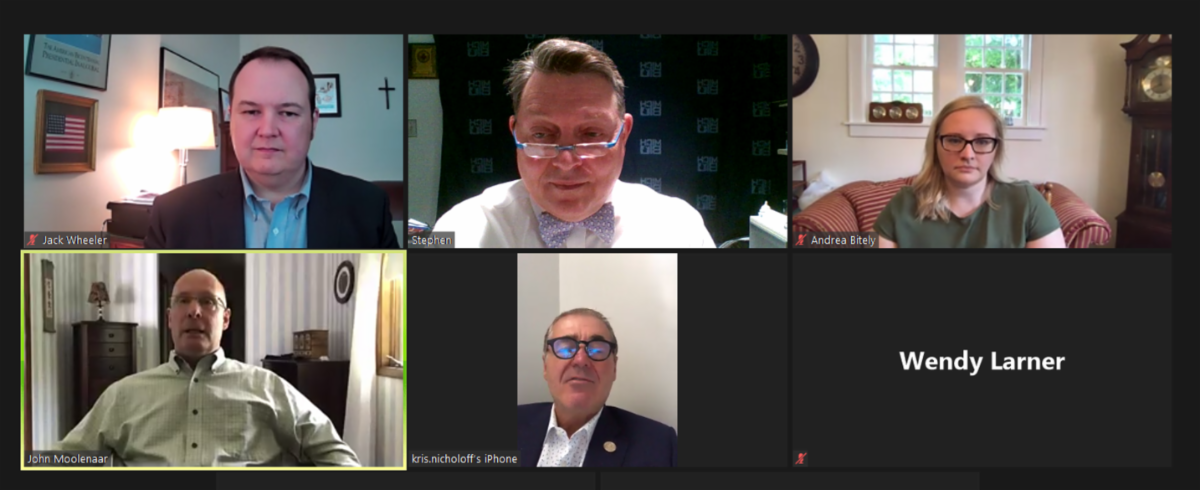
MichBio Provides Perspectives on SBIR/STTR Programs. MichBio was invited to present its perspectives on the utility of the SBIR/STTR programs. The National Academy of Sciences, Engineering and Medicine was charged to conduct a nationwide assessment and is hosting various interviews with relevant stakeholders across the U.S.
Stephen Rapundalo, PhD, President and CEO, participated in an online meeting alongside Randy Myer, an entrepreneur and Professor of the Practice of Strategy and Entrepreneurship, University of North Carolina, and Josh Makower, MD MBA, Co-Founder & Advisor, Stanford Biodesign, Chairman & Founder, ExploraMed Development LLC and General Partner, New Enterprise Associates.
The 75-min discussion focused on how applicants/beneficiaries viewed benefits and drawbacks of the SBIR/STTR program, what investors (VCs, angels and corporates) thought, and what changes/improvements could be implemented to strengthen the programs and make them more impactful.
|
|
|
MichBio Raises Alarm Over New Convalescent Plasma EUA. MichBio sought quick action from Michigan Congressional officials for clarity from the FDA on the labeling requirements for units of Covid-19 convalescent plasma (CCP) available for transfusion into patients.
MichBio became aware a major unintended consequence of the FDA’s recent issuance of an EUA covering use of Covid-19 convalescent plasma (CCP). Specifically, as spelled out in the “Fact Sheet for Health Care Providers”, requirements called for display of the antibody titer on each unit of CCP. These labeling requirements were significantly different than previously in use for CCP collected and distributed for the Expanded Access Program (EAP) led by the Mayo Clinic. Since the EAP was closed upon EUA issuance, no existing units were eligible for use under the auspices of that protocol.
MichBio immediately raised the incongruencies in requirements to the attention of Rep. Fred Upton (R-MI) and Rep. Debbie Dingell (D-MI), both members of the U.S. House Energy & Commerce Committee that oversees the FDA. The legislators expeditiously communicated our concerns in a letter to FDA Commissioner Stephen Hahn for his timely response and action.
The new labeling requirements meant that transfusion services at health systems across Michigan and nationally could not legally transfuse existing CCP units to any patients who presented to a provider institution and qualified for transfusion. In addition, the change caught blood suppliers like the American Red Cross unaware, and so procurement of CCP from their inventories was impacted too.
This past weekend, we received word that the FDA acknowledged the unintended consequences, identified workarounds for the short term, while it worked to issue an amended guidance. As a result, the first EUA patient was transfused using existing CCP supplies.
Thank you Reps. Dingell and Upton for quick action!
|
|
|
CMS Issues Proposed Rule That Provides Immediate, National, 4-year Coverage for Breakthrough Devices
The Centers for Medicare & Medicaid Services (CMS) released the long-awaited proposed rule on “Medicare Coverage of Innovative Technologies.” The proposed rule, which is the result of many years of hard work and advocacy on the part of AdvaMed, its member companies and state affiliates like MichBio, would make significant changes to streamline Medicare coverage for FDA-designated breakthrough technologies that have market authorization.
The proposed rule would create a new, voluntary Medicare Coverage of Innovative Technologies (MCIT) pathway that would provide immediate, national Medicare coverage of any FDA-market authorized breakthrough device if the device meets certain criteria. This automatic coverage would begin on the date of FDA-market authorization and would last for four years, after which time coverage would be determined through existing processes (national or local coverage determinations, or claim-by-claim adjudication).
The full text of the proposed rule can be accessed here. CMS is seeking comments on the proposed MCIT pathway. Comments are due October 29th.
|
|
|
Advocacy at the State Level
MichBio Hosts Legislative Briefing on Covid Testing. MichBio hosted a legislative briefing on “Covid-19 Testing: Fundamentals, Utility, Challenges and Policy Implications”. Five member companies served as expert presenters with the aim of educating legislative offices on the types of tests, whom to test, testing timing and frequency, interpretation of test results, testing supply chain, clinical uses and utility, as well as the regulatory, payment and policy impediments standing in the way of implementing an efficient and broadly available testing system for Michigan citizens.
Presenters included Mike Pisano, PhD, Vice President of Business Development and Contract Research at Cayman Chemical, Brandon McNaughton, PhD, Co-Founder and CEO at Akadeum Life Sciences, Anna Langerveld, PhD, Founder and CSO at Genemarkers, Alan Mack, CEO at NxGen MDx, and Phil Levy, MD, Vice President of Translational Sciences and Clinical Research Innovation at Wayne State University. Stephen Rapundalo, PhD, President and CEO of MichBio, moderated the session and spoke to the policy implications.
The briefing was recorded and is available here.
|
|
|
|
Correction
The following revision corrects misstatements in the original article whereby we referenced opposition to HB 5944. First, we should have cited HB 5943 as the “accumulators bill” to which we were opposed in its original form, not as HB 5944. A substitution was introduced to HB 5943 to which the bio-industry is now amenable. Secondly, and instead, we should have indicated our opposition to HB 5940 as corrected below.
Drug and Medical Price Transparency. Chairman Frank Vaupel (R-Howell) held a hearing of House Health Policy Committee, wherein a legislative package of nine bills targeting various facets of the pharmaceutical costs supply chain was discussed. Substitutes to the bills were introduced.
MichBio, as well as BIO, PhRMA and various drug manufacturer companies are opposed to HB 5937, the so-called “drug manufacturer data reporting act” or “manufacturer transparency bill” that would require drug manufacturers to submit annual reports that detail the aggregate list price, total R&D cost to bring to market, total manufacturing, distribution and marketing/advertising costs, and rebates and other incentives applied, for the period of time that the prescription is available on the market. Such costs would have to be tracked even by early stage biotechs in case their products are ultimately marketed or sold to another company who would market them.
In addition, the bio-industry opposes HB 5940, as it seeks to regulate drug manufacturer sales representatives through the Board of Pharmacy. The bill is typically referred to as the “gift ban bill” but its pricing disclosure and sales rep regulation is most concern.
The House Health Policy Committee will continue to convene on this package of bills in the coming weeks. Stay tuned.
|
|
|
Your Voice is Important
You can help keep decision-makers informed on the needs of the bio-industry and help support business-friendly policies that allow for continued growth and development of tools and technologies that improve and save lives. Use the link below to send us an email and find out how you can help.
|
|
|
|
|