


Budget will lower costs, power economic development, and guarantee pre-K through associate degree
LANSING, Mich. – Governor Gretchen Whitmer released her sixth executive budget recommendation today, once again prioritizing the issues that make a real difference in people’s lives. This balanced, fiscally responsible budget proposal lowers costs for Michiganders, helps every child succeed from pre-K through postsecondary, and ensures any person or business can “make it” in Michigan.
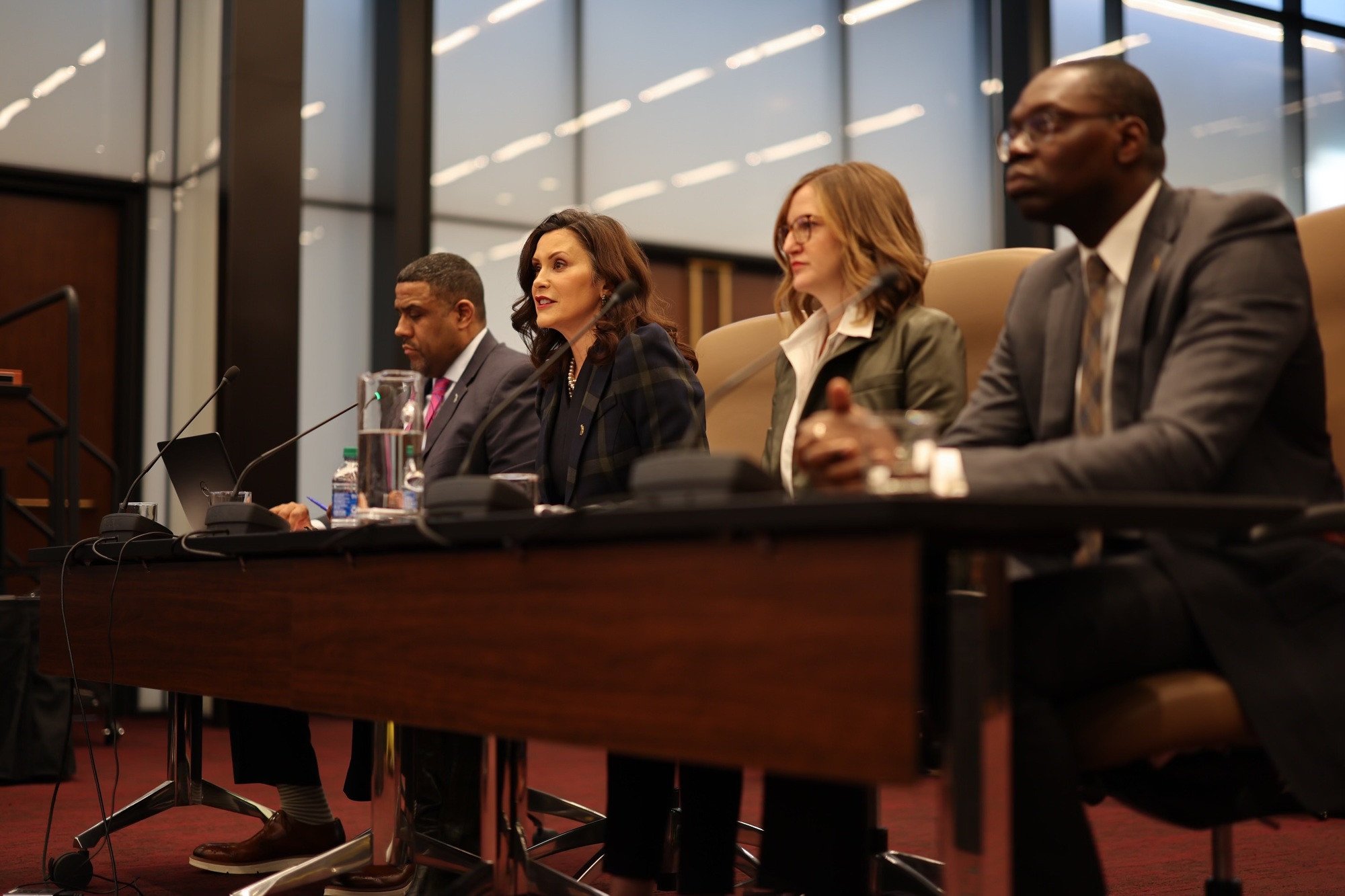
The governor and State Budget Director Jen Flood outlined the proposal to a joint session of the House and Senate appropriations committees. The budget recommendation includes investments that make life more affordable, ensure every child has a high-quality and affordable education, reduce crime, cut red tape, power economic development, and build a fairer and more equitable Michigan.
“My balanced, fiscally responsible budget recommendation for fiscal year 2025 builds on the historic investments we’ve made since I took office and delivers on the issues that make a real difference in people’s lives,” said Governor Whitmer. “Together, let’s lower costs for working families, deliver the Michigan Guarantee to offer every Michigan child a free public education from pre-K through community college, save family caregivers thousands on their taxes, and power our economic and workforce development to build and lead the future. Let’s get it done so everyone can ‘make it’ in Michigan.”
“Our budget recommendation will serve and support the success of every Michigander and help more individuals, families, and communities reach their full potential in Michigan,” said Lt. Governor Garlin Gilchrist II. “This budget makes historic investments to keep money in the pockets of working families, grow educational and economic opportunity, and boost access to affordable quality healthcare. We look forward to working with our partners in the legislature to deliver a budget that makes a difference in peoples’ lives and builds a bright future for anyone who wants to call Michigan home.”
The fiscally responsible budget recommendation totals $80.7 billion, including a general fund total of $14.3 billion and a school aid budget totaling $19 billion. It provides a significant amount of one-time funding while maintaining balance in future years and utilizes one-time funds for one-time purposes. It also continues paying down debt obligations, freeing up future funding for programs ahead of schedule, like free preschool.
“Governor Whitmer understands that families across Michigan are feeling the pinch of rising costs, and her budget recommendation includes investments that will make a real difference for Michiganders across the state,” said State Budget Director Jen Flood. “The Governor’s budget will help kids learn, lower costs, and spark investment and create new jobs in our state. I look forward to working with our legislative partners to make Michigan the best state to live, work, raise a family, and care for those we love.”
Balancing Michigan’s Budget & Cutting Red Tape
The governor’s fiscally responsible budget recommendation sets money aside for a rainy day, brings the amount of retirement debt paid off under her administration to more than $21 billion, makes government work better, and more, including:
- Pays off a “mortgage” early (certain Michigan Public School Employees’ Retirement System liabilities), freeing up $670 million that can be invested into classrooms to help children learn.
- $100 million deposit into the Budget Stabilization Fund, which will bring the grand total in the rainy day fund to more than $2.2 billion by the end of FY25.
- $10 million deposit into the Disaster and Emergency Contingency Fund to support immediate response and recovery activities in the event of a disaster or emergency.
- $4.4 million to improve turnaround time and public outreach for environmental permitting.
- $500,000 to establish a hazard mitigation assistance program to help local governments implement projects that reduce natural disaster risks.
- $4.8 million to increase child care facility inspections.
A Better, More Affordable Education
The budget recommendation delivers on “The Michigan Guarantee” by continuing record investments in education, from preschool to postsecondary:
K-12 Education – Helping Kids Learn
- $370 million to support school operations through a 2.5% increase in base per-pupil funding that equates to an additional $241 per student, for a total of $9,849 per pupil.
- $300 million to continue historic investments for student mental health and school safety needs.
- $251.2 million to help students reach their full academic potential, including continuation of payments for literacy grants and literacy coaches.
- $200 million to continue providing universally-free breakfast and lunch to Michigan’s 1.4 million public school students, helping students focus on learning and saving families $850 per year.
- $200 million for tutoring through the MI Kids Back on Track program, and continuation of expanded learning opportunities through before and after school programs.
- $175 million in recognition of the crucial role high-quality teachers play in the success of their students.
- Continued support of the MI Future Educator Program, a tuition-free program for college students to become certified teachers and stipend payments to student teachers
- Funds to retain and develop existing teachers through mentorship programs.
- $159 million for continued expansion of free pre-K to every 4-year-old in Michigan-two years ahead of schedule-saving families $10,000 a year.
- $63.5 million to serve an estimated 6,800 additional children.
- $42.8 million to increase the full day per child allocations to $10,342.
- $35 million to open new classrooms in underserved areas.
- $18 million to continue higher payments for student transportation.
- $127 million to continue expanded support for special education students – a 12% increase in the state allocation from adjusted current law levels.
- $125 million to provide a 5% increase in funding to support academically at-risk students, English language learners, career and technical education students, and students in rural school districts.
- $125 million to continue reimbursements to districts for transportation costs, helping ease the disproportionate financial impact some districts face-freeing up dollars available for the classroom.
- $45 million for additional supports for vocational education and career and technical education, including equipment upgrades, and a new pilot program to connect high schoolers with key local industries to support pathways to certifications, credentials, and careers.
Higher Education & Workforce Development
- A 2.5% ongoing increase for university and community college operations to support higher education learning and to advance the Governor’s goal of 60% of working adults earning a degree or skills certificate by 2030.
- $30 million investment to increase funding for the Michigan Achievement Scholarship, the state’s flagship scholarship program.
- Expand the Michigan Achievement Scholarship with the Michigan Guarantee to ensure every Michigan high school graduate can receive an associate degree or skilled certificate tuition-free at a community college, saving more than 18,000 students up to $4,820 on tuition each year.
- $62 million to continue Michigan Reconnect, providing a tuition-free pathway to adult learners 25 and older.
- $20 million increase in the Tuition Incentive Program, which provides tuition support to lower income students in Michigan’s community colleges, public universities, and private universities.
- $14 million for the North American Indian Tuition Waiver, to provide tuition-free education to eligible Native Americans at Michigan public universities and community colleges.
Lowering Costs
The FY25 budget puts money back in people’s pockets, including:
- $37.5 million to create the Caring for MI Family Tax Credit, saving families who care for an aging or sick relative up to $5,000 a year on their taxes.
- $25 million for the MI Vehicle Rebate, which lowers the cost of buying a new vehicle by offering a $1,000 rebate, increased to $2,000 for electric and plug-in hybrid vehicles. An extra $500 is included, for a total of up to $2,500 off at the point of sale, for union-assembled vehicles.
- $500,000 to continue the federal EBT summer food benefit program, which distributes $108 million in federal funds to ensure children have access to nutritional food throughout the summer months, saving families $120 per child.
Making it in Michigan
The budget recommendation proposes investments to power economic development, rebuild our roads and bridges, build strong communities, and more, including:
Economic Development
- $500 million in continued investment in the Strategic Outreach Attraction Reserve fund to attract new manufacturers and industries to Michigan helping to diversify our economy and compete nationally for high-paying jobs.
- $100 million for a research and development tax credit to spur innovation while lowering costs for businesses.
- $60 million to establish an Innovation Fund to invest in scalable startups and help launch hundreds of new Michigan-based companies, creating thousands of jobs.
- $80 million to clean up contaminated sites and bring Michigan in line with other Midwest states when it comes to out-of-state trash haulers.
- $25 million for the Build Ready Sites program to identify and prepare sites in Michigan for future development or redevelopment, creating a statewide inventory of development-ready sites to attract and promote investment in Michigan.
- $20 million to build off the iconic Pure Michigan campaign, on top of the $15 million in existing general fund for the program, with a focus on talent attraction, labor retention and relocating to Michigan.
- $20 million for business attraction and community revitalization, on top of $100 million in existing ongoing funding, to stimulate job creation and private investment, revitalize and redevelop vital properties, and support small businesses that serve as the backbones of our communities-spurring economic growth.
- $20 million to increase funding for Going Pro, on top of $54.8 million in existing ongoing funding, to further expand employer-based training that results in industry recognized credentials and certificates.