


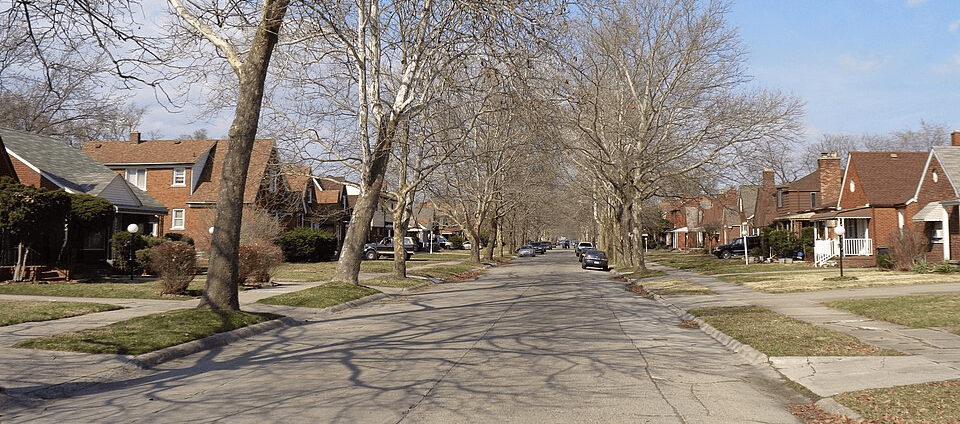
Detroiters continue to call for more to be done to combat crime in the city. In a 2025 survey from the Detroit Metro Area Communities Study (DMACS), Detroiters reported that crime and safety should be a high priority for Mayor Mary Sheffield. During her State of the City address, Mayor Mary Sheffield stated that property crime was a concern among residents and businesses and a priority for her administration. Detroit has much lower property crimes than it did in 1990, but property crime has been increasing in recent years and is at levels that are higher than other peer cities. Social determinants of property crime include poverty, income inequality, and unemployment. Addressing social determinants of property crime is key to enhancing public safety in Detroit neighborhoods and stemming crime from the source. |
In a Nutshell — FBI data shows that from 2020 to 2024 larceny thefts in Detroit have increased by 33 percent, while motor vehicle thefts have increased by 44 percent. — Generally, property crime has been on the decline in Detroit and its peer cities since 1990. However, Detroit’s motor vehicle theft rate continues to be the highest among six peer cities in 2024. Detroit larceny theft rate was higher than four of six peer cities but has tended to be in the middle range among peers historically. — The Research Council recommends that the Sheffield Administration focus on addressing the social determinants of crime, which include poverty, income inequality, and unemployment, based on our analysis and existing crime research. Effective policy solutions include anti-poverty programs, workforce development, and blight reduction. Recent announcements by the Sheffield Administration suggest a deterrence strategy through enhanced street lighting and a new property crime squad. |
Detroit Ballot Issue |
|
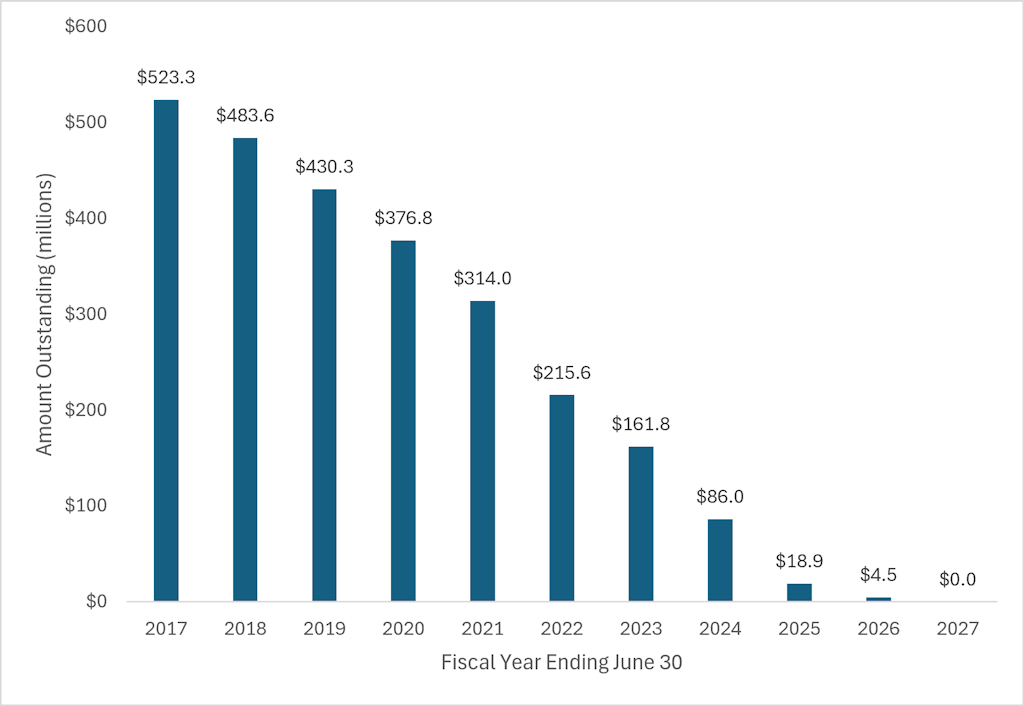
Proposal S on the August Detroit ballot asks voters to transfer existing school operating taxing authority from Detroit Public Schools (DPS) to Detroit Public Schools Community District (DPSCD). This would allow DPSCD to receive its full 2026-27 state foundation allowance of $10,300 per student. |
The tax is expected to generate $112 million in 2026 for the district’s portion of the state-local funding formula, or about $2,300 for each of the roughly 49,000 pupils counted in the foundation allowance formula. Major issues to consider: Voters providing authorization to eventually authorize DPSCD to levy the local school operating tax was a key part of the 2016 state-financed DPS financial recovery package. The State of Michigan provided ten years of state-financed legacy operating debt repayments. Once all DPS’s legacy debts are repaid (September 2026), the local school operating taxing authority must transfer to DPSCD to allow the district to receive its full per-student foundation allowance consistent with the local-state funding arrangement used by other Michigan school districts. |
Miss the webinar on MI data center controversies? We’ve got you covered.

Webinar & Slide Deck |

Online Sponsorships & Information
Media Coverage |