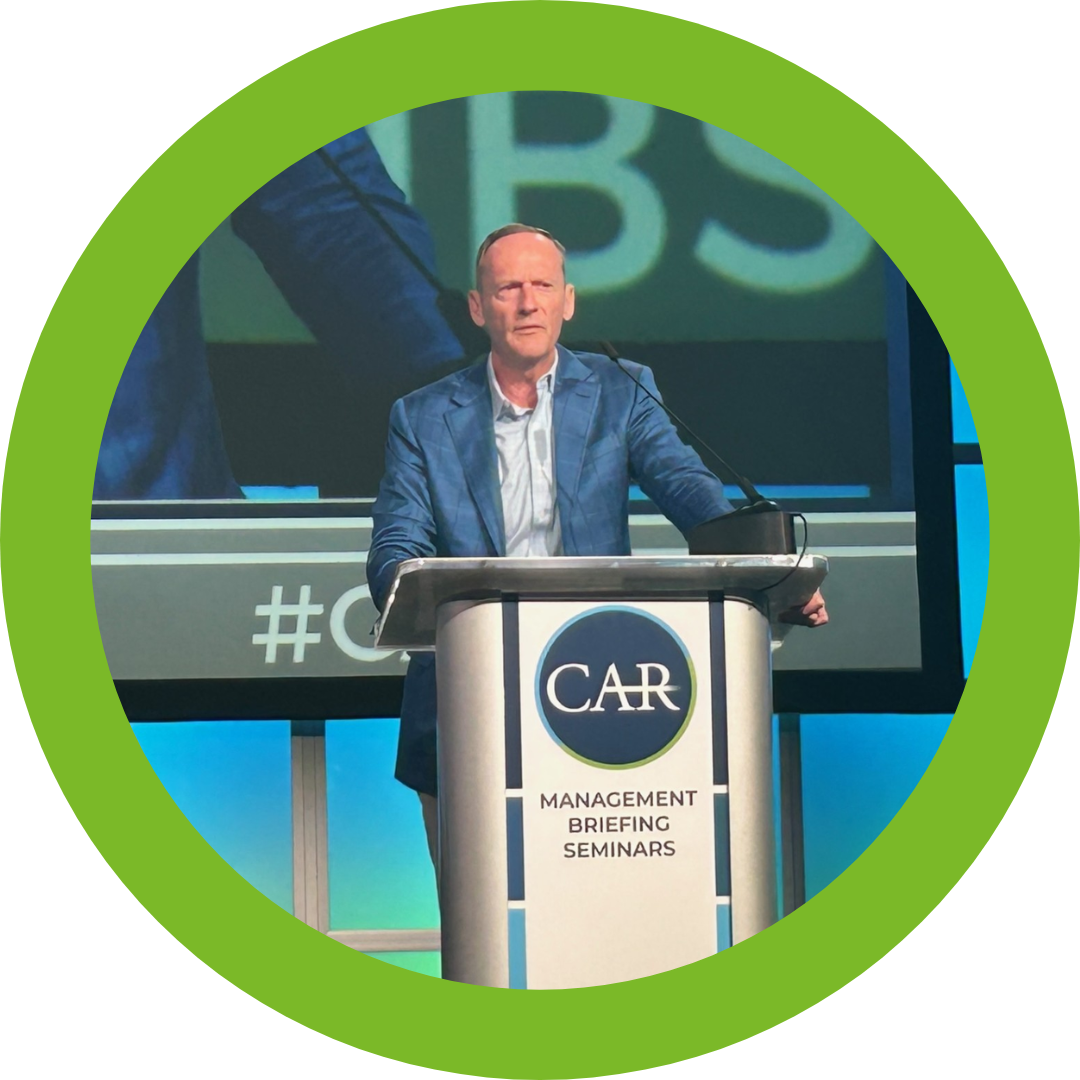
Shailen Bhatt, administrator at the Federal Highway Admin., addresses V2X group at MBS.
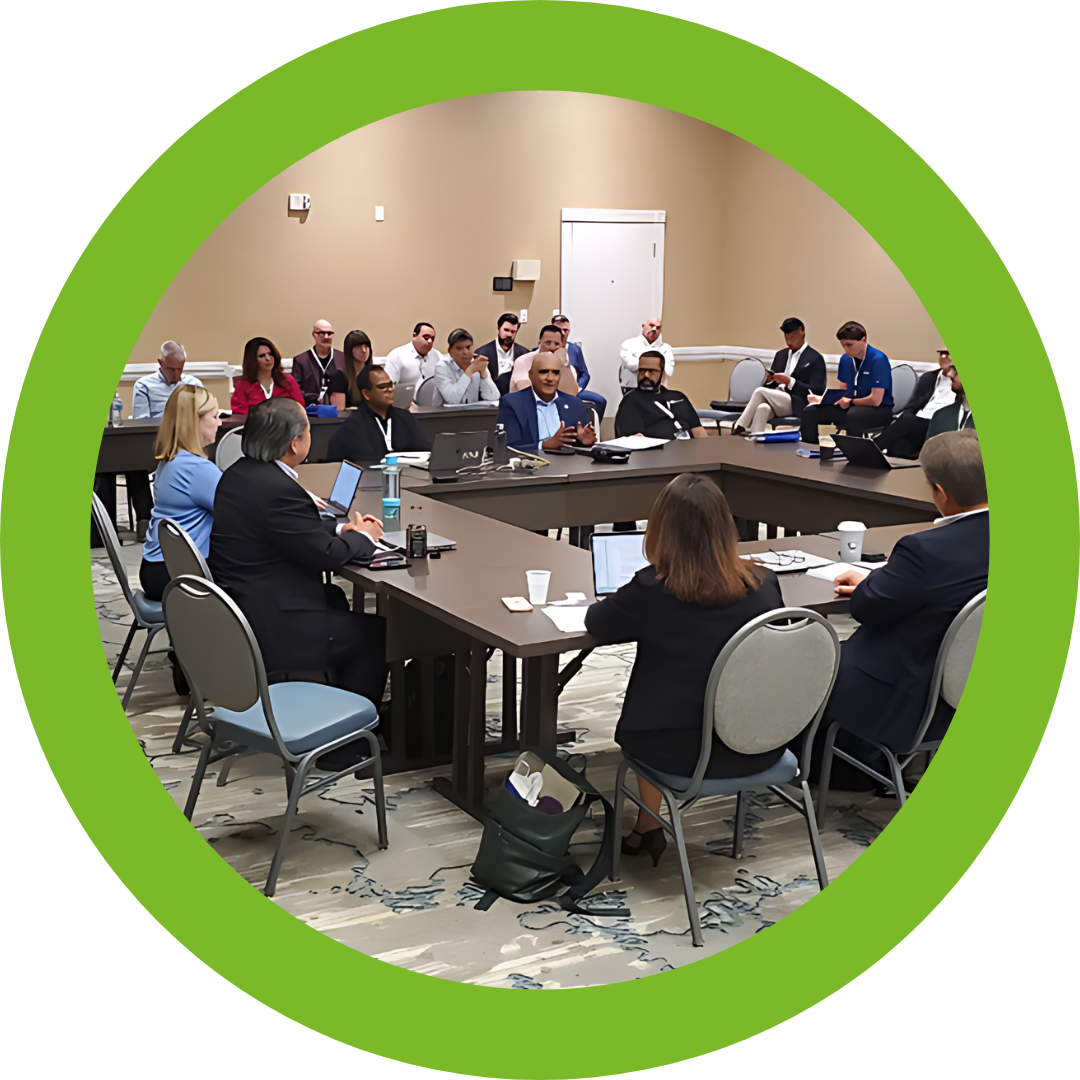
A top Biden Admin. official joined a Center for Automotive Research s Management Briefing Seminars discussion that addressed the challenge of accelerating and optimizing V2X in automotive.
The roundtable brought together Audi, Volkswagen, Harman, Tata and Continental along with Haas Alert and startup Cavenu. Also joining the conversation was Shailen Bhatt, administrator at the U.S. Federal Highway Admin.
Attendees discussed what many see as the elephant in the room : That the industry has squandered an opportunity to utilize the 75MHz of spectrum in the 5.9GHz band allocated by the FCC back in 2002 and that has now been reduced to 30MHz. There is a real need to show motion in V2X and to deliver benefits to society or there is a future risk this spectrum allocation could also be at risk. One person said delay is unacceptable because a fatal road accident occurs every 15 minutes.
The point was made that it is necessary to think about the subject differently. For too long there has been a chicken-and-egg scenario of who should start first; the automakers or the transport infrastructure owners and operators (IOO). Now, Utah s Department of Transport has concluded that it must be both the chicken and the egg and initiated infrastructure investments as well as enabling their fleets of vehicles with V2X capability.
Others in the room identified the challenge as the 10,000-plus IOOs of various sizes, many of whom do not have the budget nor the capability to implement V2X, which means getting nationwide interoperable V2X infrastructure is a real challenge.
Recognizing the enormity of this capital investment is part of the challenge and it was suggested that embracing an existing infrastructure and using the power of the 4G/5G mobile networks could accelerate the V2X program. Only about 20% of V2X use cases require low-latency connectivity, while the other 80% could be delivered via V2N. It’s not so much about mission-critical information; it’s more about preventing people and vehicles from getting into danger zones by sharing available information early from sensors and other vehicles. But this also requires ubiquitous coverage from mobile operators, including the possibility of vehicles seeking and swapping to the strongest network coverage including non-terrestrial networks in the future.
It was noted that there is a tendency in the automotive industry, and to a degree in the transport industry, to make everything and want it perfect before implementation. Incremental advances could save lives and waiting is fatal as technology is changing and accelerating at a very fast pace.
Haas, with their safety alert system, has integrated with Stellantis bringing the service to millions of vehicles via OTA updates and backend software. They have also worked with Tesla and are working with VW, who say the process is very easy to do. Haas said they spent time with public safety officers and roadworkers who are all vulnerable if cars are not aware of them. It’s not about policy or technology; it’s about focusing on the service and delivering value by leveraging existing technology and using the available data.
Common platforms and open data sharing will facilitate deployment at scale, but at this time the sharing of data is still a real issue. There must be established mechanisms to facilitate this that add benefits to everyone and create trust for the consumers. Equally, business models need to recognize that consumers must to see the value otherwise, why would they pay more for the technology and capability?
There is an increasing sense of urgency to start and scale V2X but also a more open mind to collaboration and different technologies being leveraged to incrementally move the deployment forward.



 (MBN was on hand today and recorded nine interviews while at CAR MBS #59, watch for those to publish in upcoming days)