

LANSING, Mich. — LAFCU employees gave a standing ovation to retiring members of its board of directors during the credit union’s recent All Staff Day, celebrating more than a century of combined leadership that helped guide LAFCU from its automotive-industry roots to the full-service, $1.1 billion financial institution it is today.
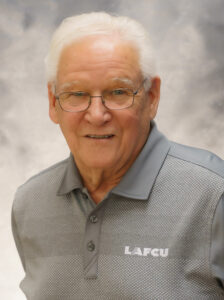
Mel Place, Tommie G. Culpepper and Jere Glen Auvenshine devoted a combined 106 years to LAFCU and to advancing the credit union movement, ensuring members remained at the center of every decision. Each was honored with a framed certificate, which was signed by LAFCU employees.
“Mel, Tommie and Jere never forgot who they were serving — the members,” said Patrick Spyke, LAFCU CEO. “Their insight, mentorship and commitment grounded LAFCU and kept us focused through times of growth, change and innovation. They made tough decisions when it mattered and helped shape LAFCU into the strong, people-first credit union it is today. We are deeply grateful for their service and the legacy they leave behind.”
Mel Place – 40 years of service
When Place joined the LAFCU board in 1985, the credit union had about 40 employees and nearly $116 million in assets. Four decades later, LAFCU has grown to nearly 200 employees and more than $1.1 billion in assets — progress he both witnessed and helped drive.
Place served as LAFCU board vice president and on the Asset/Liability Management and Election committees. A Holt resident and longtime General Motors employee for 41 years, he also held multiple UAW leadership roles, including serving 31 years as chairman of Local 1618.
Throughout his tenure, Place helped champion changes that expanded access and convenience for members. He also supported board decisions that helped fuel LAFCU’s growth, including LAFCU’s first merger with Mid-Michigan Credit Union in Charlotte, followed by two subsequent mergers: Centel Credit Union in Owosso and Lansing Postal Credit Union. During his tenure, LAFCU transitioned from a federal to a state charter and made the innovative decision to become an early investor in a credit union service organization (CUSO) — Member Driven Technologies — at a time when very few credit unions were participating in CUSOs.
“Serving on the board gave me a voice for the autoworkers, especially during tough times,” Place said. “We were able to help people through layoffs with payment deferments and special loans. And knowing that members are still in such good hands today means a lot. It’s been a good ride — we have some of the best leadership we’ve ever had at LAFCU.”
Tommie G. Culpepper – 40 years of service
Culpepper, a lifelong Lansing resident, retires from the LAFCU board after 40 years of steady, member-centered leadership. Known for his thoughtful approach, he brought continuity through decades of organizational change and was widely respected for keeping the needs of everyday members at the forefront of board discussions.
During his tenure, Culpepper’s volunteer service began on LAFCU’s credit committee, and later he served as board secretary and was an active member of both the Delinquency and Insurance committees — roles that drew on his practical judgment and understanding of the membership. He supported major initiatives throughout the years, including the merger with Lansing Postal Credit Union and the development of the St. Johns branch.
LAFCU CEO Patrick Spyke described Culpepper as a mentor whose guidance was grounded in fairness.
“Serving the credit union has been an honor,” Culpepper said. “I thank the membership for the opportunity.”
Jere Glen Auvenshine – 26 years of service
Auvenshine joined the LAFCU board in 1999 and served as board treasurer. He brought extensive financial expertise from his 39-year career at General Motors, where he served as UAW financial secretary-treasurer. A Lansing native, Auvenshine maintained a strong connection to both the community and the UAW membership LAFCU was founded to serve.
During his time on the board, Auvenshine helped guide LAFCU through significant periods of growth and transition, including surpassing $1 billion in assets, strengthening relationships with new UAW members, and supporting long-term leadership stability. He also chaired the committee overseeing CEO contracts, contributing to continuity at the executive level.
Beyond the boardroom, Auvenshine played a key role in strengthening member connections by creating the annual LAFCU-UAW Picnic in Bradenton, Florida. Held each February, the event brings together about 100 LAFCU members and retirees, fostering camaraderie and a shared sense of community that reflects the credit union’s people-helping-people philosophy.
Reflecting on his service, Auvenshine said the most rewarding part was “meeting lots of new and nice people, networking at conferences and connecting with others all over the country.”
A lasting legacy
Spyke noted that Michigan was once home to almost a dozen automotive-related credit unions, and LAFCU is the only one that endured.
“These three gentlemen helped steward LAFCU over decades and into a modern, resilient organization,” Spyke said. “They furthered the credit union movement and ensured LAFCU remained true to the principle of people helping people, including its employees. Their service will guide us for decades to come.”